
Microsoft 365 E7 Pricing: E5 Plus Copilot Cost Model
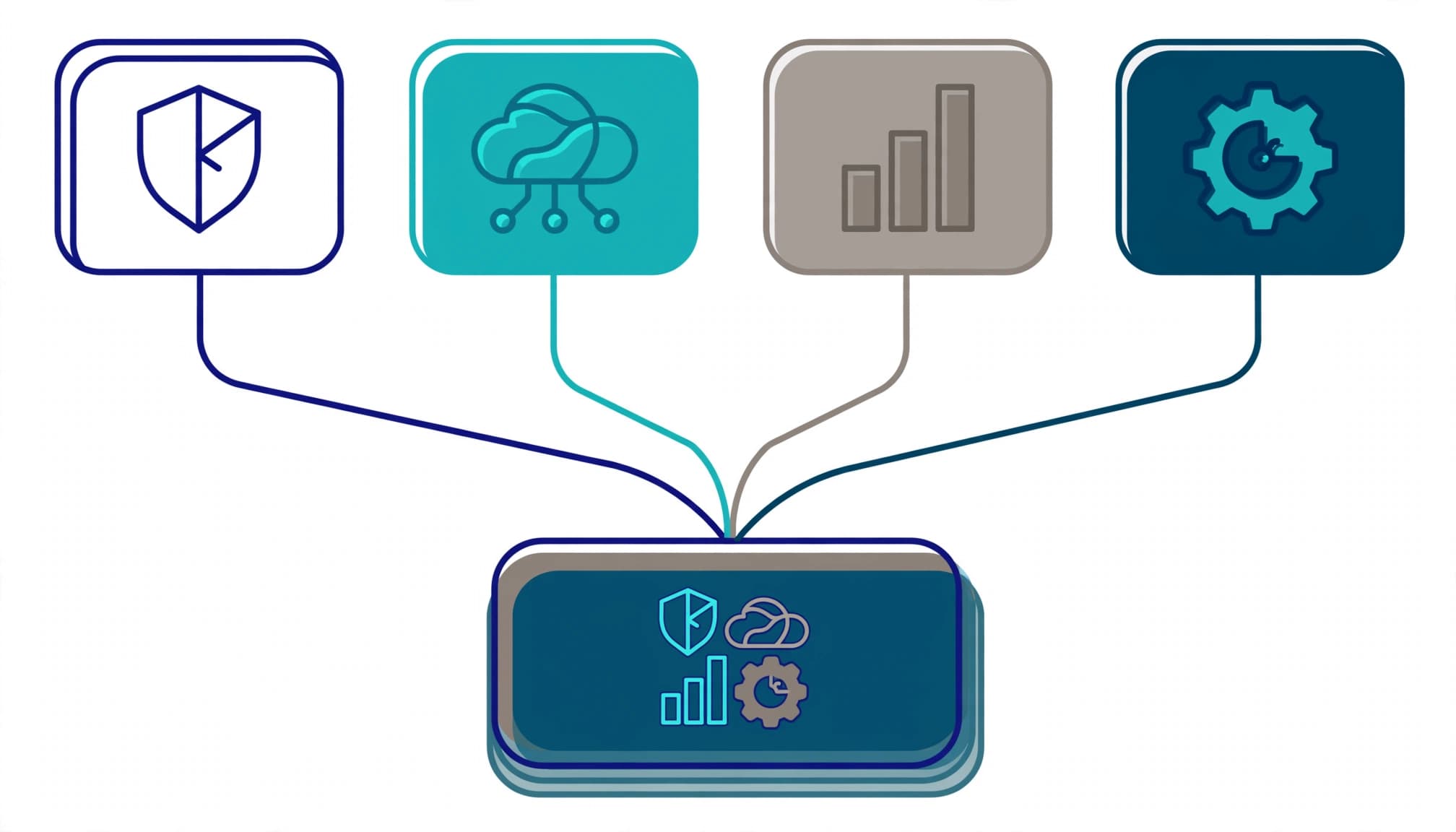
Compare E7 against the licenses you already fund, not the full standalone bundle. Microsoft 365 E7 pricing is $99 per user per month at list price, on an annual commitment, versus $90 for E5 plus standalone Copilot after July 1, 2026.
The $99 covers licensing only; Azure compute, model, and message consumption bill separately. For an E5 plus Copilot baseline, I would approve the additional $9 only against a documented identity or agent-governance requirement. Start with that difference.
Key takeaways for budget approval
- E7 adds $108 per user annually to the E5 plus standalone Copilot list-price baseline.
- The advertised $18 monthly saving assumes you need all four separately licensed components.
- Targeted E7 assignments preserve existing E5 coverage without purchasing Copilot for roles that will not use it.
Keep license savings, consumption forecasts, and productivity assumptions separate. Finance should see which figures are contractual, which are calculated, and which depend on adoption.
Microsoft 365 E7 pricing against standalone licenses
Microsoft announced the Frontier Suite on March 9, 2026, with general availability on May 1, 2026. Microsoft's E7 announcement lists these launch dates and the annual-commitment list price.
The published component list-price reference model is straightforward. These figures cover licensing only; Azure compute, model, and message consumption are separate.
| Component or package | Monthly list price per user |
|---|---|
| Microsoft 365 E5 | $60 |
| Microsoft 365 Copilot | $30 |
| Microsoft Entra Suite | $12 |
| Microsoft Agent 365 | $15 |
| Separate component total | $117 |
| Microsoft 365 E7 | $99 |
The Frontier Suite comparison shows approximately 15% savings against the full component bundle. That figure doesn't apply to an E5 plus Copilot baseline or every buyer.
For an organization already funding E5 plus Copilot, the additional licensed components are Entra Suite and Agent 365. Copilot adoption doesn't justify paying for the upgrade twice.
Microsoft's enterprise plan pricing also lists E7 without Teams at $90.45 per user monthly, paid yearly. Compare matching Teams configurations, since a lower no-Teams price doesn't establish savings against a baseline that includes Teams.
Any quote-specific CSP promotional discounts must appear separately from Microsoft's published list prices and be verified for the customer's agreement.
Name the starting license before approving the increase
Apply the July 2026 baseline
Effective July 1, 2026, the July 2026 price increase raised Microsoft's published commercial list prices with Teams: E5 increased from $57 to $60 monthly, and E3 increased from $36 to $39. Existing agreements move to updated pricing at renewal.
Before the change, E5 plus standalone Copilot totaled $87 at list price. Afterward, it totals $90. The monthly difference against E7 therefore falls from $12 to $9 when the revised baseline applies.
Keep the renewal date beside the price. Otherwise, procurement compares different contract periods and calls the difference a saving.
Use the correct upgrade comparison
These monthly differences use the updated licensing-only list-price baseline.
| Current license baseline | Monthly baseline per user | E7 monthly increase |
|---|---|---|
| E3 | $39 | $60 |
| E5 | $60 | $39 |
| E5 plus standalone Copilot | $90 | $9 |
The E3-to-E7 increase is $60 per user, so E3 customers must justify security, identity, and AI additions together. E5 customers must justify Copilot and the additional governance capabilities. E5 plus Copilot customers have a narrower decision.
E7 vs E5 is a $39 monthly increase; adding standalone Copilot lowers the E7 difference to $9. I would not accept one business case for all three groups. The retained security coverage and incremental benefits differ.
Scale the E5 plus Copilot model by seat count
Use the $9 monthly difference to calculate the approval amount before discussing productivity. The following annual figures derive from published list prices and exclude implementation and separately billed consumption.
| Seats upgraded | E5 plus Copilot annually | E7 annually | Annual increase |
|---|---|---|---|
| 100 | $108,000 | $118,800 | $10,800 |
| 500 | $540,000 | $594,000 | $54,000 |
| 1,000 | $1,080,000 | $1,188,000 | $108,000 |
The increase scales directly with assigned seats. A department-level requirement does not justify a tenant-wide purchase.
At 5,000 total users, E5 for everyone plus standalone Copilot for 1,000 users totals $3,960,000 annually at list prices. A hybrid licensing model assigns E7 to the 1,000 users with a documented requirement. It retains E5 for the other 4,000, for a total of $4,068,000 annually, an increase of $108,000.
Assigning E7 to all 5,000 users instead totals $5,940,000 annually. That purchase expands both the license commitment and the number of people expected to use Copilot.
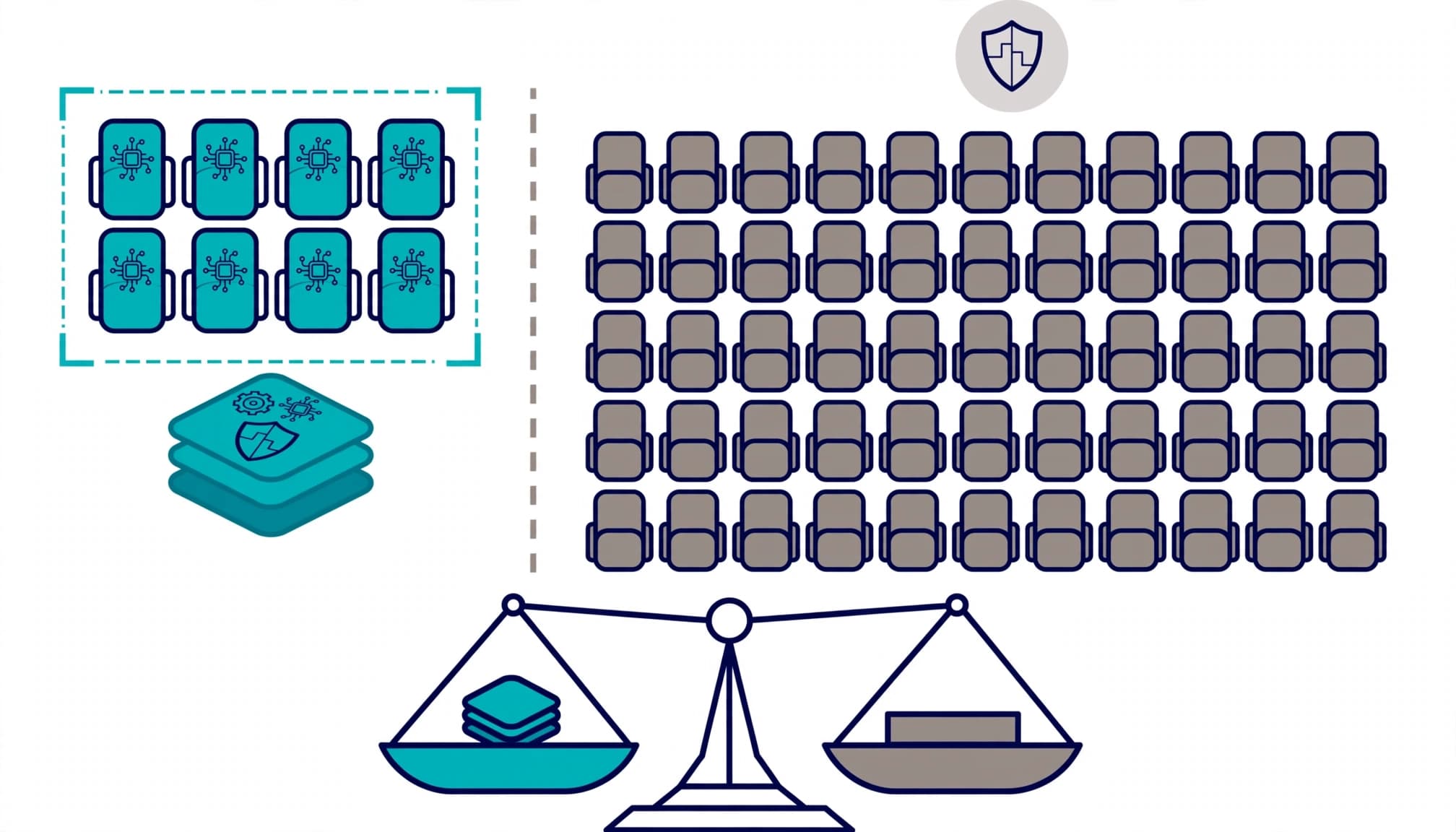
Use E7 license utilization forecasting to separate active demand, planned demand, and unassigned capacity. Assign a department owner to each proposed group. Do not purchase seats against an undated adoption promise.
Fund the controls your team will operate
Separate Entra additions from existing E5 coverage
Microsoft Entra Suite includes Entra ID Governance, Entra Internet Access, and Entra Private Access. Its governance capabilities include Privileged Identity Management, which E5 customers already receive through Entra ID P2.
Count existing entitlements before assigning value to the upgrade. The full standalone Entra Suite list price is a reference figure, not proof of your incremental spend. Existing entitlements, agreement pricing, and deployed third-party services affect that comparison.
I'd require an owner, deployment date, and retirement decision for overlapping identity or access products. Otherwise, the business keeps both bills.
Assign responsibility for Agent 365
Microsoft Agent 365 is generally available as a governance control plane. It extends identity, security, and data-governance oversight across agents through Microsoft Entra, Microsoft Defender, and Microsoft Purview. Microsoft's March 9 security announcement describes that security role.
Agent 365 governs and controls agents but doesn't build or execute them. An assigned license doesn't establish an approval process.
Name who approves an AI agent, who owns its permissions, and who disables it after unexpected behavior. Check Microsoft documentation to confirm where Copilot Studio and Microsoft Foundry agents are built or run, and verify each product's documented role and current GA or preview status. Tie the requirement to data leakage, audit findings, or operational exposure. An agent inventory without accountable owners leaves the business carrying the same risk.
Budget beyond the subscription
Separate usage charges from implementation work
The $99 per-user monthly list price covers licensing only. Azure compute, model, and message usage are billed separately as consumption costs.
Forecast agent compute costs using applicable documented meters and measured pilot activity, not a universal agent charge. Use pilot data to show expected and high-usage cases without presenting either as a guaranteed bill.
Azure consumption planning for E7 belongs beside the license model. In Azure Cost Management, assign a budget owner and configure alerts. Budget alerts notify people, but they don't impose a universal spending cap.
Before approval, verify Copilot Cowork's current GA or preview status and licensing treatment in official Microsoft material.
Keep support ownership explicit. Someone must investigate failed workflows, unexpected usage, and permissions changes after deployment.
Account for Security Copilot capacity correctly
Eligible E5 and E7 customers receive 400 Security Compute Units monthly for every 1,000 licensed users, capped at 10,000 SCUs monthly. Activation is phased for eligible customers.
Microsoft's published Security Copilot pricing example uses $6 per overage SCU. Keep any applicable overage separate from the included allocation.
For an E5 plus standalone Copilot baseline, don't present Security Copilot as an entirely new E7 benefit. Record the existing entitlement, activation status, and expected usage first.
A forecast that ignores included capacity overstates spending. A forecast that assumes unlimited capacity understates it. Both produce an unreliable approval amount.
Define the licensing review deliverables
Scope the review around evidence your administrators already hold. Reconcile Microsoft 365 licensing assignments under Billing > Licenses and activity under Reports > Usage in the Microsoft 365 admin center with purchased quantities and renewal dates.
Then assess Conditional Access in the Microsoft Entra admin center, Intune device compliance, endpoint hardening, and Microsoft Purview data-protection policies. Copilot access shouldn't expand ahead of the controls protecting the underlying data.
The deliverable should be a decision package: a reconciled license inventory, a role-based assignment matrix for a mixed licensing model with targeted seat allocation, an annual cost comparison, and a remediation backlog. Each finding needs an owner and a date. Include deployment steps, rollback conditions, and the operational handoff.
Through Microsoft 365 migration and licensing services, I would keep the licensing decision tied to tenant readiness. A purchasing recommendation without the work required to operate it safely is incomplete.
For small IT teams, that scope matters more than a long product presentation. You need a usable plan.
Questions budget approvers ask
Is E7 worth buying when E5 and Copilot are already funded?
Approve it when the additional identity and agent-governance capabilities have funded deployment plans and accountable owners. Microsoft's Copilot announcement places Copilot within E7, but its existing value remains part of your baseline.
Do not count it again.
When is a separate assessment unnecessary?
A separate engagement adds little when your team already has reconciled assignments, reliable usage evidence, tested controls, and an approved operating model. Keep E5 plus Copilot when the additional E7 capabilities have no near-term use.
An unused entitlement does not reduce operational risk.
Approve the necessary work
For an E5 plus standalone Copilot baseline, the decision starts with an additional $108 per user annually at list prices. Approve that increase only where the additional controls have an owner and a deployment plan.
Keep licensing and consumption separate, and require a documented handoff before expanding assignments.
Book a free 30-minute call to scope a licensing review against your current baseline.