
E5 to E7 Governance: A Release-Control Plan
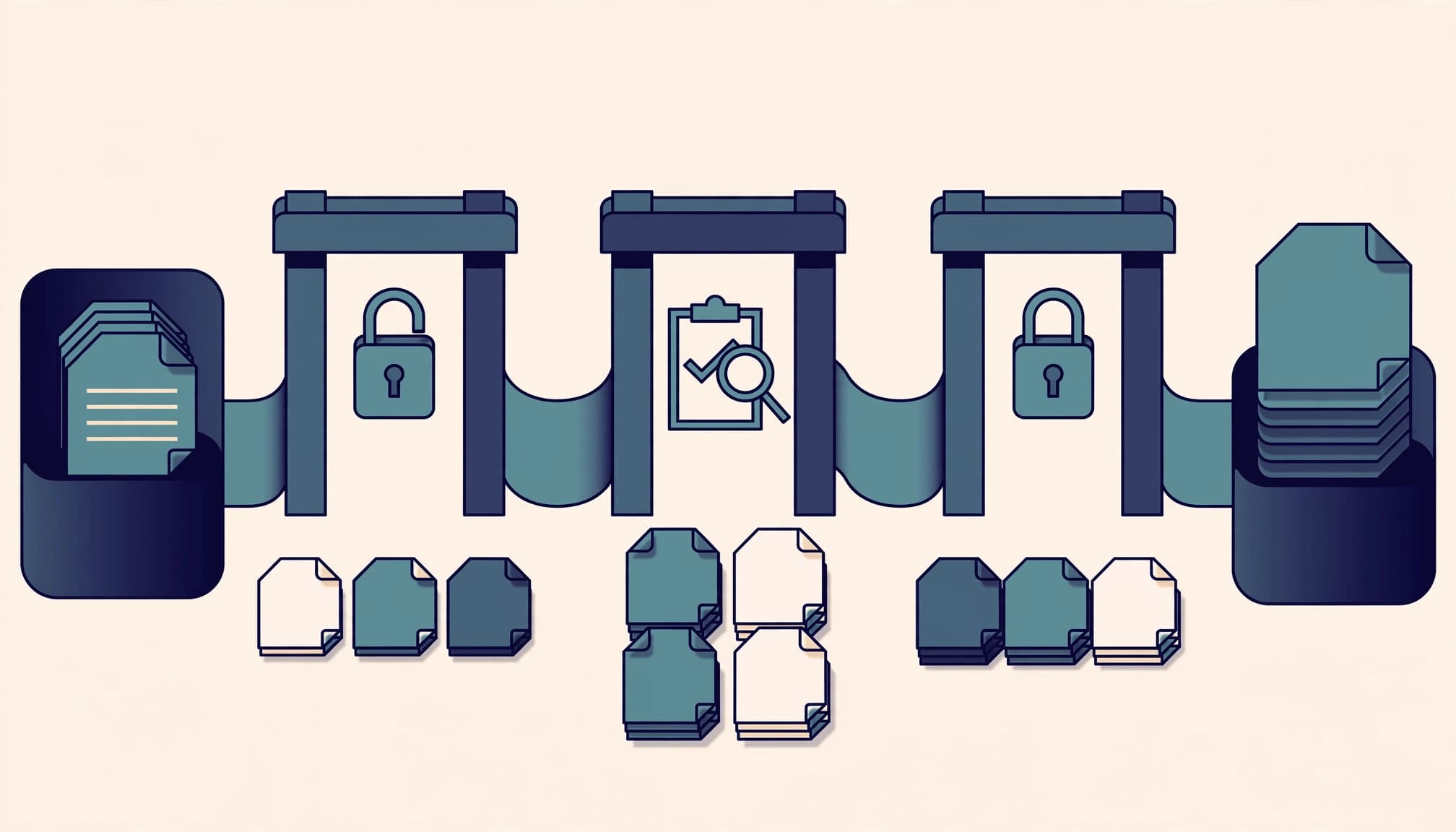
Treat E5 to E7 governance as a controlled release before assigning the first license. I start with the existing entitlement, the business workflow, and the person responsible for stopping the rollout when evidence fails.
An upgrade can expand AI access while leaving permissions, support procedures, and renewal commitments untouched. Your change record needs to connect those dependencies before they become data leakage, downtime, or an unexpected renewal bill.
Start with the commercial baseline, then build the release gates around it.
Key takeaways for release approvers
Approve named user groups, documented controls, and a recovery procedure before approving broad assignment. E7 adds value when the same population needs Copilot, expanded identity capabilities, and agent governance.
I keep license consolidation separate from operational readiness. A lower bundle price does not establish that sensitive data is ready for broader discovery or that somebody owns the agents accessing it.
Price the correct licensing baseline
Microsoft's May 1, 2026 availability announcement established Microsoft 365 E7, branded the Frontier Suite, as generally available. It combines Microsoft 365 E5, Microsoft 365 Copilot, Microsoft Entra Suite, and Microsoft Agent 365.
These published U.S. list prices use annual commitments and the Teams-inclusive baseline.
| Licensing baseline | List price per user/month | What changes with E7 |
|---|---|---|
| Microsoft 365 E3 | $39 | Adds the E5 foundation and bundled AI and identity capabilities |
| Microsoft 365 E5 | $60 | Adds Copilot, Entra Suite, and Agent 365 |
| E5 plus standalone Microsoft 365 Copilot | $90 | Adds Entra Suite and Agent 365 |
| Microsoft 365 E7 | $99 | Consolidates all four components |
$99 per user per month covers licensing only. Azure compute, model, and message consumption bill separately, including applicable Copilot Studio and Microsoft Foundry workloads.
E5 increased from $57 to $60 on July 1, 2026. Standalone Copilot at $30, Entra Suite at $12, and Agent 365 at $15 bring the component total to $117 per user per month. Before that E5 increase, the arithmetic was $114.
E7 therefore adds $9 over E5 plus Copilot, but $39 over E5 alone. Moving from E3 adds $60, approximately 154%. That increase needs a use case for the complete bundle.
A list-price budget for 400 E3, 400 E5, and 200 E7 seats totals $59,400 monthly, versus $99,000 for 1,000 E7 seats. Both figures cover licensing only; Azure compute, model, and message consumption remain separate. A mixed licensing model with role-based assignment deserves particular attention in estates exceeding 5,000 seats.
Build the change record before assignment
Reconcile entitlements and dependencies
I begin in the Microsoft 365 admin center with Billing > Your products and Users > Active users > Licenses and apps. Record purchased quantities, assignments, standalone add-ons, renewal dates, and the groups controlling assignment.
Separate inactive accounts, shared devices, contractors, and privileged administrators. Record the service plans that must survive the transition, including users whose Power BI Pro entitlement must be preserved during an E3-to-E7 move. Microsoft's service-plan identifier reference provides identifiers for comparing assignments through Microsoft Graph or exported records.
The output is a reconciled seat register with an owner for every proposed upgrade. Purchased capacity alone doesn't establish demand.
Map existing controls before adding policies
Review Conditional Access, Microsoft Intune compliance policies, Defender for Endpoint, Microsoft Purview data loss prevention, retention, and sensitive-site permissions as part of your Zero Trust baseline. Record policy scope and exceptions, not screenshots alone. For the Microsoft 365 Copilot population, assess data readiness and access boundaries with Microsoft's Work IQ documentation.
Microsoft Entra Suite adds capabilities across Internet Access, Private Access, identity governance, ID Protection, and Verified ID. Some capabilities overlap existing entitlements. Privileged Identity Management already available through E5 shouldn't become a second claimed benefit.
Microsoft's Security Copilot inclusion documentation also includes E5 and E7. Don't count Security Copilot as an E7-only justification.
Run the release through evidence gates
Approve one representative pilot
Choose an existing workflow with an accountable business owner. Define its permitted data sources, expected result, support route, and failure conditions before enabling additional capabilities.
I would require IT to participate first, followed by a representative departmental group. Include remote access, guest collaboration, managed devices, and the applications that matter during payroll or month-end processing.
The pilot gate passes only when approved users retain required access, restricted information stays restricted, and support can trace failures. My E7 pilot design guidance develops that decision into a bounded test.
Separate assignment from enforcement
Assigning E7 and enforcing new access restrictions should be separate changes. Otherwise, an authentication failure becomes an argument about which change caused it.
For new Conditional Access policies, use Report-only in the Microsoft Entra admin center and review sign-in results across a complete business cycle. Assign an owner and expiration date to every exception.
Before enforcement, document the stop conditions: lost access to a critical application, unexpected sensitive-data exposure, or missing audit evidence. The change authority stops expansion when a condition occurs. Recovery must identify the previous assignments and policy state, with the necessary capacity retained.
Put Agent 365 under operating control
Register agents and assign responsibility
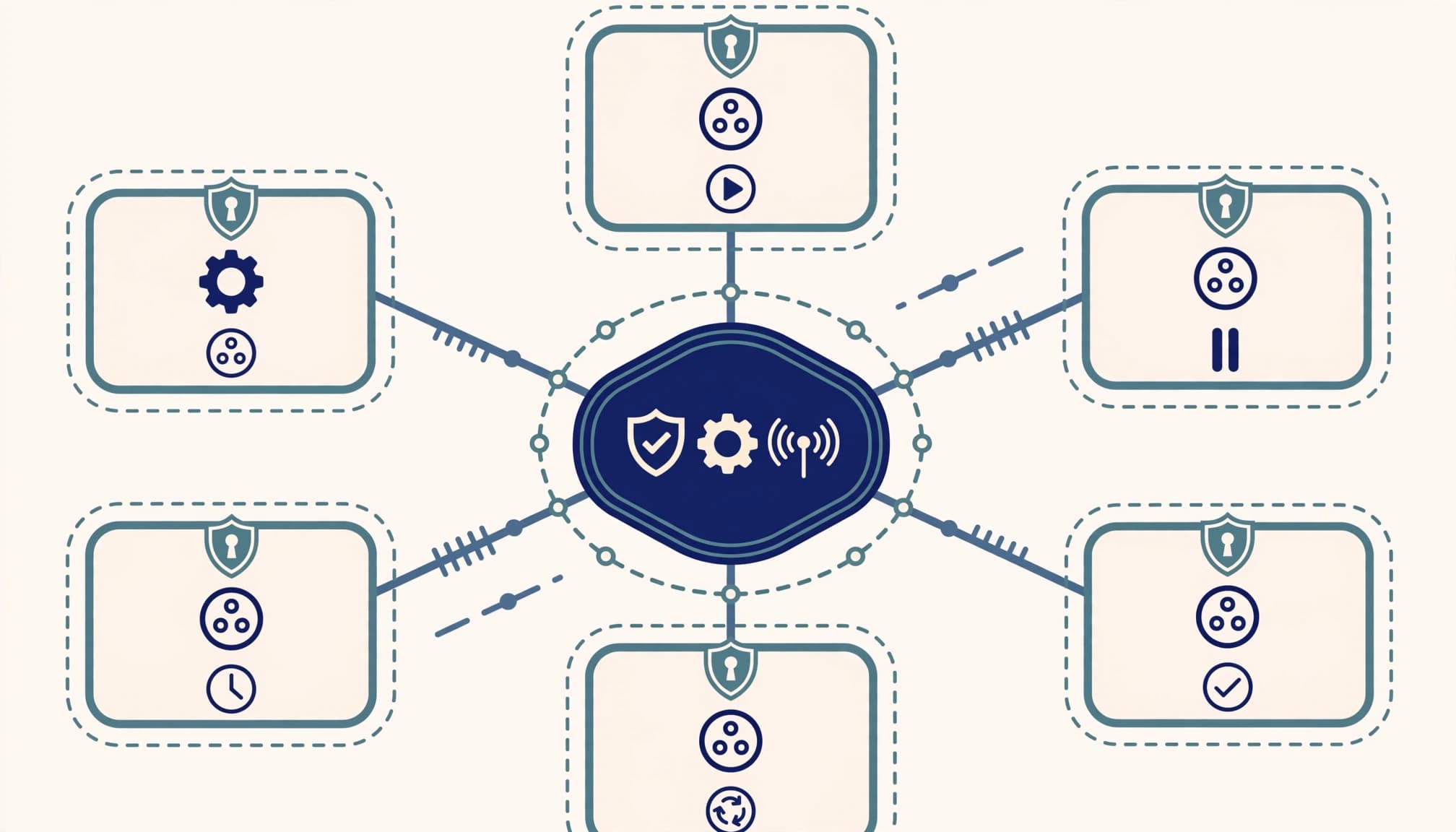
Microsoft describes Agent 365 as a control plane for agent governance. It governs agents; it doesn't build them or provide their runtime.
Agent 365 uses Microsoft Entra Agent ID and provides inventory, audit, and lifecycle controls, with governance across Entra, Defender, and Purview. I would require every AI agent in the production inventory to have a business owner, technical owner, approved purpose, permitted connections, and retirement condition.
Shadow agents operate outside the approved inventory. Their commercial exposure is straightforward: information can leave through an integration nobody has accepted responsibility for maintaining or investigating.
Test permission changes and retirement
Don't accept an inventory screen as proof of enforcement. Revoke permissions and confirm AI agents lose access. Check that their actions appear in the audit trail and retirement removes their remaining connections.
Review Entra identity records, Defender alerts, and Microsoft Purview Audit together. The evidence should show who authorized access, what happened, and who investigated the exception.
Count GA capabilities in the committed release. Microsoft's March 9, 2026 Cowork announcement described Copilot Cowork, developed with Anthropic, as a research preview. Frontier-program access didn't establish availability for every E7 customer. Keep preview-dependent outcomes outside production acceptance criteria.
Close the commercial and operational handoff
Keep renewal decisions separate from reassignment
Moving a user between licenses does not cancel the subscription commitment behind the original purchase. Procurement must record the purchasing channel, term, renewal date, cancellation boundary, and any supported co-term arrangement in the change record.
Microsoft 365 E7 is offered through EA, CSP, and Web Direct, with Teams-inclusive and no-Teams options. Preserve the intended Teams entitlement during a partial move. A different SKU name is not permission to remove voice or collaboration services mid-contract.
I keep CSP promotional pricing in a separate contracted-rate model. Promotional economics should never determine whether an untested release proceeds.
Deliver an operating record that survives handoff
The handoff should contain the assignment register, control map, test evidence, exceptions, recovery procedure, and support ownership. Finance receives the recurring licensing position and a separate forecast for Azure compute, model, and message consumption, including agent compute costs, with named budget owners.
Operations receives escalation routes and a scheduled review of agent access, license utilization, and unresolved exceptions. Set consumption alerts before production use, not after the first billing dispute.
Through my Microsoft 365 migration and licensing services, I scope this work around documented assessment and project handoff. The deliverable is a decision and an operating record, not another product comparison.
Keep the engagement proportional to the problem
A full E5-to-E7 governance engagement is not worth funding when there are few Copilot users, no approved agents, and clean E5 assignments. I would start with a narrower licensing review that identifies unused seats and missing security controls.
For a small IT team, identity cleanup, endpoint security, device hardening, and business continuity can take priority. E7 does not retire a legacy server, repair cloud infrastructure, or correct excessive SharePoint access.
A readiness assessment should test adoption intent, data readiness, platform timing, and support capacity. It can establish that staying on E5 is the correct decision.
Outside help earns its place when ownership crosses procurement, security, infrastructure, and business operations. Scope the work around those unresolved dependencies. Do not attach an enterprise transformation project to a licensing question.
Frequently asked questions
Does E7 require replacing existing security tools?
No. Keep existing protections operating while you map coverage and test the added capabilities. Any retirement of third-party endpoint or security tooling needs its own coverage analysis, acceptance criteria, and recovery procedure. A bundle purchase is not sufficient evidence to remove a working control.
Should E5 plus Copilot users automatically move?
No. The comparison turns on whether those same users need Entra Suite and Agent 365. If the additional controls have no approved owner or use case, retain the existing baseline. Selective add-ons and mixed licensing remain valid options.
What if a promotional deadline arrives before readiness?
Keep the release gate intact. A licensing review can identify reclamation opportunities and produce a role-based purchase plan without authorizing deployment. I would approve a smaller ready population before accepting a broad commitment whose value depends on unfinished controls.
Is commercial E7 available in every Microsoft cloud?
No. The launch excluded sovereign and US Government clouds, education, and nonprofit offerings. Keep those populations outside the commercial release scope. A commercial E7 entitlement does not establish an equivalent package or deployment path for those environments.
Approve the release, not just the purchase
A defensible E5 to E7 governance plan connects each assignment to a business need, a tested control, and an accountable owner. The necessary work is complete when operations can explain what changed, demonstrate the evidence, and recover without improvising.
Book a free 30-minute call to scope a licensing review or readiness assessment.