
AI Agent Access Recertification in Entra ID
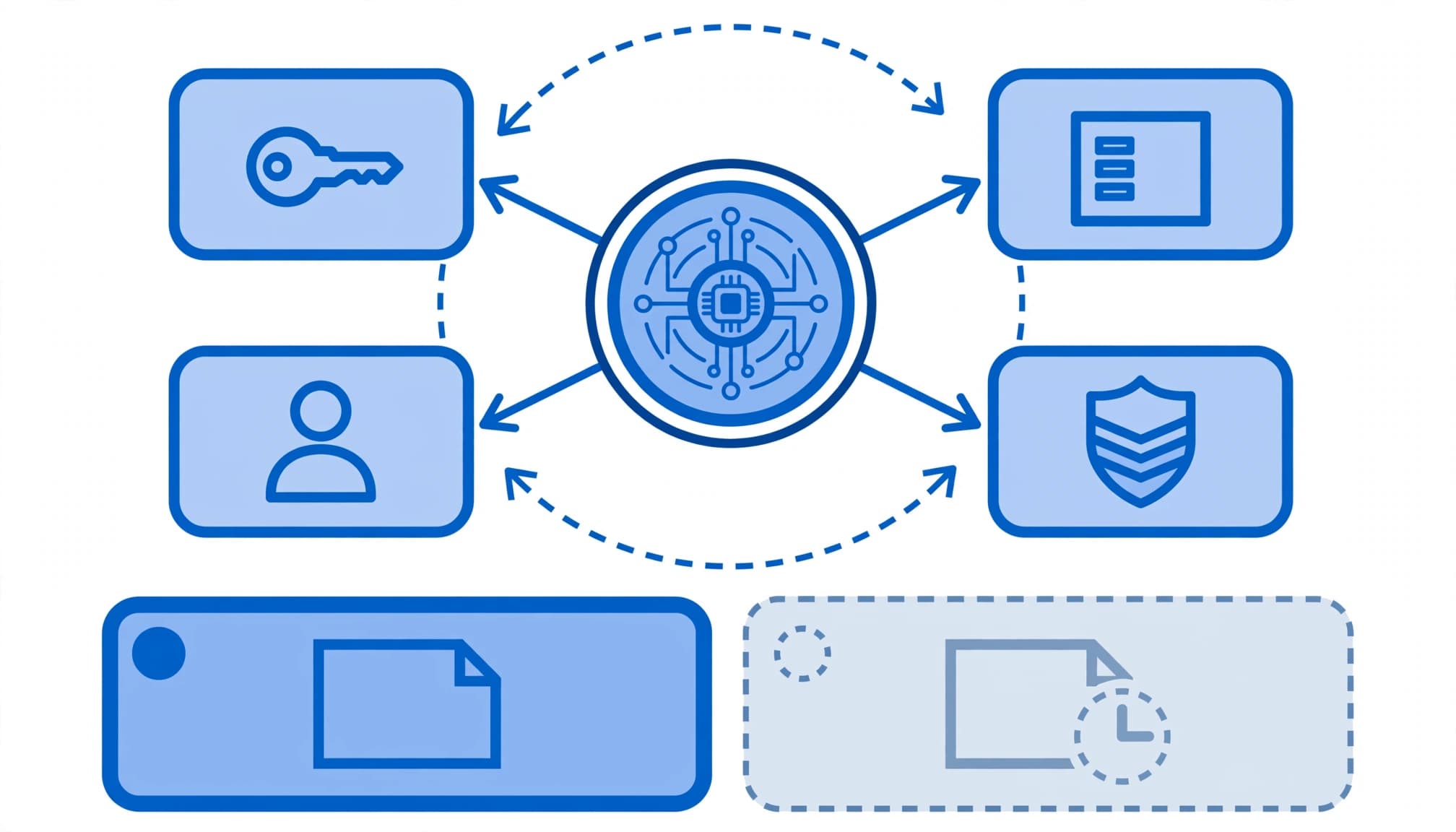
Tie agent access recertification to current permissions, named owners, and proven removal procedures. A quarterly approval records a decision, but it does not establish that an agent's credentials, API permissions, or downstream access remain appropriate.
I treat the review as one control within a larger process: prevent unnecessary access, detect permission changes, and respond when an agent exceeds its approved task. Start by separating what Entra can review directly from what your team must assess elsewhere.
Key takeaways
- Review the agent's effective access, including credentials, OAuth grants, connectors, and downstream permissions.
- Use Microsoft Entra access reviews within their supported scope, then reconcile decisions against the actual resource.
- Treat revocation as containment; investigate and reverse unauthorized changes before restoring service.
Where agent access recertification fails
A periodic access review confirms history, but tokens, credentials, and permissions can change faster than the review cycle. Annual certification is especially weak when an agent gains new tools every week, before the next review cycle.
Incomplete inventories produce incomplete decisions
NHIMG research reports that only 5.7% of organizations have full visibility into their service accounts. An unlisted non-human identity (NHI) can leave an approval process with no way to account for it.
The 2026 Infrastructure Identity Survey reports that 53% of security leaders expect AI to operate major portions of their infrastructure autonomously within three years. That makes ownership and removal procedures an operating requirement, not an audit-season exercise.
Repeated approvals can conceal failure
Look for spreadsheet-heavy administration, long review windows, poor visibility into system access, and findings repeated across audit periods. Those are process failures with direct consequences: data leakage, disputed audit evidence, and avoidable downtime.
Reviewer fatigue is visible. Long approval lists without task context invite bulk approval, while nearly identical outcomes across cycles deserve investigation. I require reviewers to explain continued access against the current business task.
Set the Entra scope and licensing baseline
Separate role reviews from permission reviews
Microsoft Entra access reviews are generally available. Microsoft's PIM review documentation covers an access review of service principals assigned to Microsoft Entra roles or Azure resource roles.
That scope matters. Reviewing a privileged role assignment doesn't certify every Microsoft Graph application permission, delegated OAuth grant, connector credential, or downstream database entitlement.
For directory-role reviews, use Microsoft Entra admin center > ID Governance > Privileged Identity Management > Microsoft Entra roles > Access reviews. Maintain a separate evidence process for access outside that review scope.
Compare the identity governance licensing baseline
I start with the actual baseline: Microsoft 365 E3, Microsoft 365 E5, or E5 plus standalone Microsoft 365 Copilot. E3 includes Microsoft Entra ID P1; E5 includes P2. Copilot doesn't replace workload-identity governance licensing.
Microsoft's Workload ID licensing FAQ, updated October 12, 2026, identifies P2 licensing for reviewers and Microsoft Entra Workload ID Premium for reviewed service principals.
Microsoft's March 9, 2026 announcement set Agent 365 general availability for May 1, 2026. Agent 365 is a governance and control plane, not the runtime executing every agent. Don't treat its presence as proof that every entitlement is covered.
Build evidence before requesting approval
Assign responsibility to the business task
I build one inventory entry for each agent and trace every identity it uses. Record object IDs, application IDs, owners, credentials, grants, resource assignments, approved tasks, and retirement conditions.
The business owner approves purpose and data access. The technical owner confirms dependencies and executes changes. Security reviews exceptions and privileged access.
Use the approved workflow, resource-owner authorization, and change records as the authoritative baseline. The directory shows what exists; it does not establish what the business approved.
A disciplined agent connector permissions review connects those records to the systems the agent can reach.
Answer three current-state questions
Every certification must answer three questions: does the credential still exist, does the permission still match the task, and has a newer access path replaced this one?
Microsoft Graph User.Read.All and Directory.ReadWrite.All authorize materially different operations. A reviewer needs the permission name, its actual purpose, and the approved workflow before deciding whether either belongs.
Include recent usage, credential expiry, permission changes since the previous review, and dependencies. An unused credential needs investigation before removal, especially when it supports month-end processing or business continuity.
Set review cadence by consequence
I use the following operating baseline, then shorten intervals where the business impact requires it.
| Access profile | Review baseline | Immediate review trigger |
|---|---|---|
| Directory administration or identity-policy changes | Monthly | Any role, credential, or tool change |
| Production write access or sensitive-data access | Every 60 days | New connector, resource, or owner |
| Restricted read-only access | Quarterly | Task completion or replacement |
These are recommended operating intervals, not Microsoft defaults. Continuous monitoring still runs between reviews.
Keep each review cycle short enough to prevent approvals from becoming stale. Seven business days is a practical starting point.
Configure If reviewers don't respond deliberately. Use removal where the supported workflow and tested dependency plan permit it; route business-critical exceptions to a named owner with an expiration date.
Apply approved decisions, then test the resource. Removing the reviewed role assignment doesn't automatically remove unrelated OAuth grants or connector secrets.
Require task-scoped authorization for MCP
MCP authorisation should cover only the operation the agent needs now. Static client approval is too broad when an agent selects tools and changes tasks during execution.
The State of Secrets Sprawl 2026 report identified 24,008 unique secrets exposed in MCP configuration files during 2025. Copying credentials into another configuration file increases the number of access paths requiring ownership and retirement.
Microsoft's Azure MCP Server security guidance, updated October 2, 2026, calls for OAuth 2.1 resource-server behavior, PKCE for authorization-code flows, and issuer, audience, and expiry validation.
Use audience-bound tokens, narrowly scoped permissions, and just-in-time privilege where supported. Step-level authorization must evaluate the caller and requested operation. OAuth does not replace registration, consent, task policy, or resource-side enforcement required for MCP authorisation.
Map review evidence to recognizable controls
I use frameworks to define evidence for non-human identity (NHI) controls, not to decorate the approval record.
| Reference | Required operating evidence |
|---|---|
| OWASP NHI-01 Improper Offboarding | Retirement removes credentials, grants, and dependent access paths. |
| OWASP NHI-05 Overprivileged NHI; ASI03 Identity and Privilege Abuse | Current permissions match approved tasks; changes trigger reassessment. |
| OWASP NHI-07 Long-Lived Secrets | Credential ownership, expiry, rotation, and replacement are recorded. |
| NIST SP 800-53 Rev. 5 | AC-2 covers account management; AU-6 audit review; IA-5 authenticators; IR-4 incident handling. |
| CIS Controls v8, Control 6 | Repeatable access reviews and prompt removal of unnecessary privileges. |
| NIST CSF 2.0 | PR.AA access control, DE.CM monitoring, and GV.RM risk decisions. |
Apply NIST SP 800-53 Rev. 5 to the actual account lifecycle. Keep the owner approval, configuration change, and removal test together.
Use NIST CSF 2.0 to connect exceptions to commercial risk. The business owner should understand whether an exception exposes customer data, weakens insurance-renewal evidence, or puts a production workflow at risk.
Framework alignment doesn't prove operating effectiveness. The evidence must show that the control worked.
Contain the agent, then restore system state
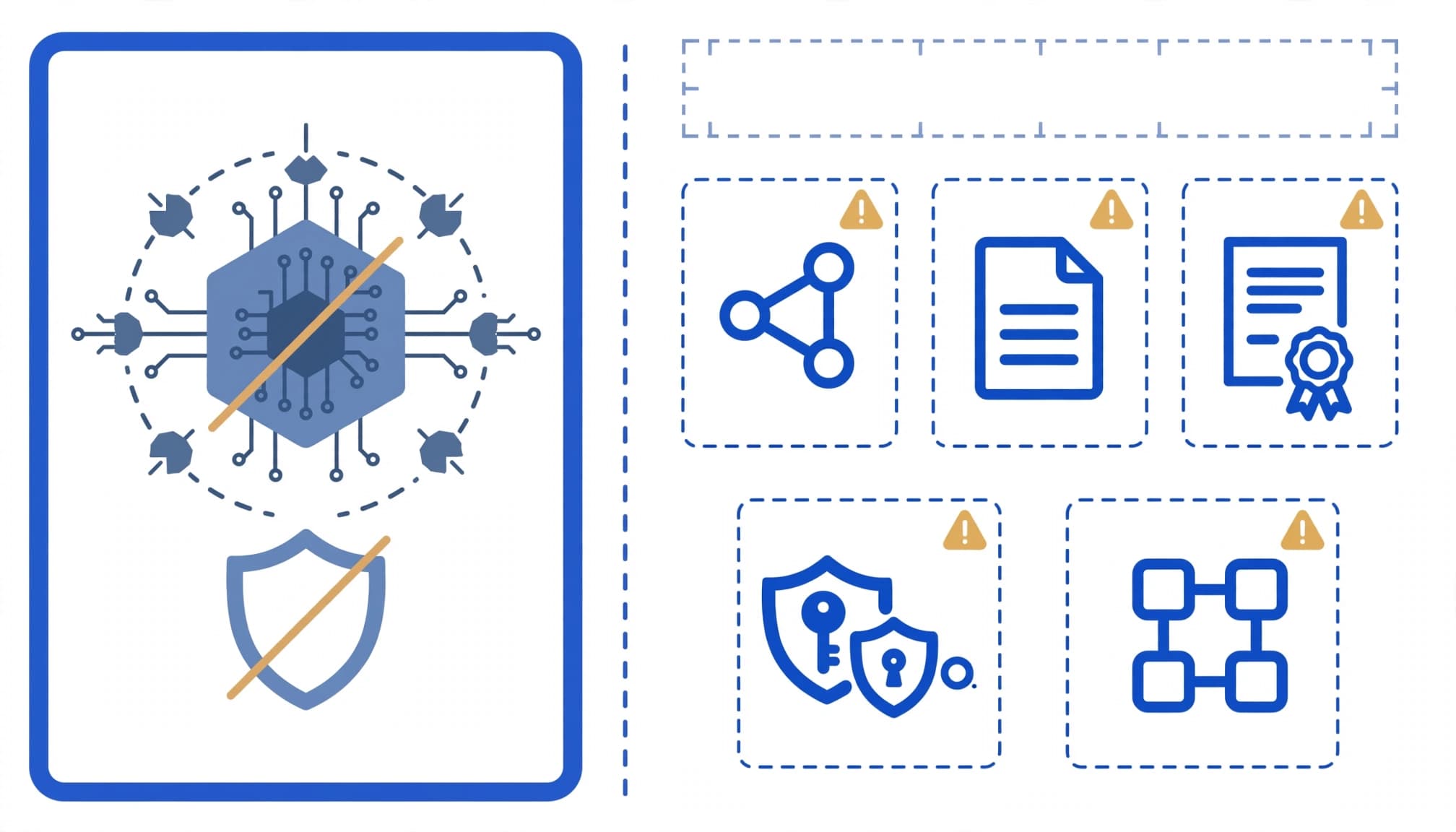
Stop further actions across every access path
Disable the compromised identity and address its credentials, grants, sessions, and downstream connections. Previously issued tokens can remain usable until expiry or resource-side enforcement takes effect. Test the affected resource before declaring containment complete.
Preserve sign-in records, audit logs, connector activity, and relevant configuration exports. Identify other agents sharing the credential or application before rotating it, because an unplanned rotation can interrupt unrelated work.
Validate changes against a known-good baseline
Revocation does not reverse changes already made to groups, policies, certificates, MFA settings, or application trust. Recovery requires a separate investigation of each state change.
Compare those changes with the approved baseline, reverse unauthorized modifications, and test the affected workflow. Re-certify access before restoring the agent.
A disabled agent can leave an attacker-controlled credential or trust relationship behind. Recovery is incomplete until those changes are found and removed.
Endpoint security and device hardening also belong in that investigation when the agent's execution host is part of the compromise.
Define a bounded assessment and useful deliverables
I scope an assessment around named agents, production workflows, and connected cloud infrastructure. The work covers identity discovery, licensing, permissions, credential lifecycle, monitoring, and recovery dependencies.
The deliverables should be concrete: an owner-approved inventory, an entitlement matrix, a prioritized remediation plan, configured review procedures, and removal-test evidence. Your team should see which permissions remain, which were removed, and who owns each exception.
My cybersecurity risk management services fit that assessment and remediation work. The engagement should leave your operators with procedures they can run.
A separate engagement is not worth it when your team already maintains that evidence and tests removal successfully. Keep the existing process and address the documented gaps.
Frequently asked questions
Does an approved review prove an agent is operating safely?
No. Approval establishes a governance decision. Safety also requires current authorization checks, activity monitoring, resource-side controls, and a tested response procedure. Approval cannot establish what happened after the review closed.
Can Microsoft 365 Copilot licensing replace this work?
No. E5 plus standalone Microsoft 365 Copilot is a licensing baseline, not certification of every agent identity. Review workload-identity requirements and each connected resource separately. The task owner remains accountable for approving continued access.
Make every approval enforceable
I consider agent access recertification complete when the owner approves the current task, unnecessary access is removed, and the removal is proven. More review campaigns will not repair an incomplete inventory or an untested revocation process.
Book a free 30-minute call to scope an Entra agent-access readiness assessment.