
E5-to-E7 Security Control Mapping for Security Leads

A Microsoft licensing renewal can increase spending while leaving data leakage, audit findings, insurance questions, downtime, or productivity exposure unresolved. I use E5 security control mapping to connect that investment to verifiable protection and assess your Security posture before recommending an E7 upgrade.
For organizations already administering Microsoft 365, the decision starts with your current configuration and evidence. A useful Risk assessment separates Security controls you already own from capabilities worth buying. It also identifies where Threat protection or operational work remains necessary.
Key Takeaways
- Start an E5-to-E7 assessment with assigned licenses, enabled service plans, actual usage, renewal terms, and the organization’s specific requirements.
- Map each control objective to its applicable capability, configuration, repeatable test, evidence, and accountable owner. A product license or Secure Score result alone doesn’t prove a control is met.
- Assess existing E5 coverage before attributing benefits to E7, and validate E7 entitlements, availability, deployment scope, and operational readiness.
- Keep licensing costs separate from Azure compute, model, and message consumption, and document cloud, hybrid, and third-party coverage boundaries.
- Recommend an upgrade only when validated requirements and a documented business case justify it; improving existing E5 controls may be the better next step.
Establish the Licensing Baseline Before Comparing E7
I start with assigned licenses, enabled service plans, renewal terms, and actual usage. A purchase report alone won’t reveal whether your security team uses the capabilities you’re funding.
Microsoft’s enterprise plan comparison is the reference for the proposed subscription, alongside your agreement and applicable licensing terms.
Compare E3, E5, and E5 Plus Copilot Separately
These starting points create different business cases.
| Current baseline | What the E7 evaluation must establish |
|---|---|
| Microsoft 365 E3 | Whether advanced E5 security capabilities, Copilot, and agent governance justify the broader upgrade. |
| Microsoft 365 E5 | Whether Copilot, Agent 365, and Microsoft Entra Suite address validated requirements beyond existing coverage. |
| Microsoft 365 E5 plus standalone Microsoft 365 Copilot | Whether Agent 365 and Entra Suite address validated gaps and justify changing the existing purchasing arrangement. |
The third baseline matters because Copilot is already licensed. Counting its full value again would overstate the upgrade’s benefit.
For regulated organizations, regulatory compliance requirements can affect the compliance management value case.
Confirm Availability and Consumption Boundaries
Microsoft 365 E7 includes E5, Microsoft 365 Copilot, Agent 365, and Microsoft Entra Suite. E7 and Agent 365 became generally available (GA) on May 1, 2026, according to Microsoft’s availability announcement.
The listed $99/user/month covers licensing only, under an annual commitment. Azure compute, model, and message consumption are billed separately. I keep those charges outside the licensing comparison so executives can see the complete operating commitment.
Government-cloud environments require a separate availability and licensing review.
Build E5 Security Control Mapping Around Evidence
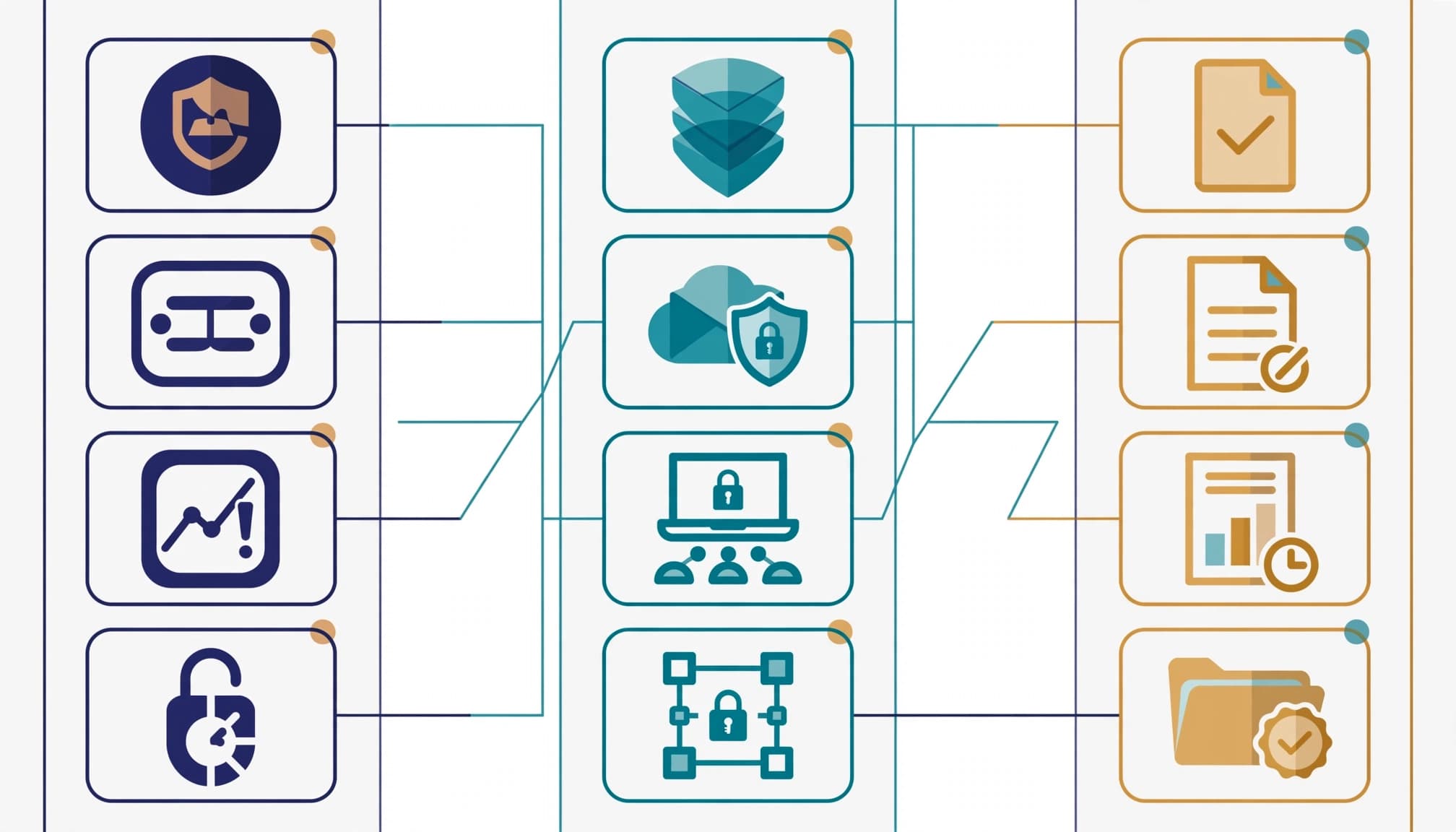
A useful map follows a clear sequence: obligation or business outcome, applicable Security controls, licensed capability and configuration, repeatable test, then evidence and owner. Inputs may include customer needs, Regulatory compliance obligations, cyber insurance conditions, internal policies, and systems that support revenue.
Record the Requirement and Its Boundaries
Each mapping record needs the exact requirement identifier and framework edition. It also identifies affected users, devices, applications, and data.
Then I record the licensed capability, actual policy identifier, accountable owner, test procedure, evidence location, and review date. This keeps the record traceable without treating a product name as proof of an entire requirement.
For Compliance management, I use CIS control mapping to connect each requirement to evidence. CIS Controls describe security outcomes, while CIS Benchmarks provide configuration recommendations. Settings and organizational responsibilities require different evidence.
Separate Configuration From Operating Proof
A Conditional access export shows that a policy exists. Sign-in records, Audit logs, and a controlled test help demonstrate that it applies to the intended accounts.
A Data loss prevention policy screenshot alone doesn’t prove Information protection works or that sensitive information is detected and handled correctly. Include a test result and, where relevant, an Incident response exercise showing the response taken.
I use Met, Partial, and Not Met findings with evidence notes. Unverified controls remain unverified, even when Secure Score awards points.
A control can be configured correctly yet remain partial because excluded users, unmanaged devices, or missing evidence leave its objective unmet.
Map Existing E5 Capabilities Before Buying More
Most upgrade discussions improve once the team sees what Microsoft 365 E5 already supports. I review identity protection, endpoint security, information protection, and response workflows in Microsoft Defender before attributing improvements to E7.
The following GA capabilities provide practical starting points, subject to applicable service-plan entitlements. E7 licensing additions don’t automatically configure controls, improve adoption, or complete operational work. Verify each entitlement and its GA or preview status against current Microsoft documentation.
| Control area | What to assess in the E5 baseline | What changes or requires validation in E7 | Evidence to collect | Likely business outcome |
|---|---|---|---|---|
| Identity and privileged access | Microsoft Entra ID P2 (formerly Azure Active Directory), Privileged identity management, Conditional access, and Identity governance | Validate applicable E7 entitlements, deployment scope, and operational readiness | Role assignments, activation settings, approval and activation records, policy exports, exclusions, risk events, and sign-in test results | More controlled privileged access and risk-based decisions |
| Endpoint protection | Defender for Endpoint Plan 2, including endpoint protection and security baselines | Validate any E7-added capabilities, entitlement, and coverage | Onboarding coverage, alerts, investigation records, response tests, and baseline settings | Better endpoint visibility and response readiness |
| Email threat protection | Defender for Office 365 Plan 2 | Validate applicable entitlements, policy scope, and operational workflows | Protection policies, scope, investigation records, and simulation results | Reduced email attack exposure |
| Information protection and Data loss prevention | Purview information protection and DLP policies | Validate applicable entitlements, policy coverage, and exception handling | Classification settings, policy scope, test events, and exception approvals | Reduced sensitive-data exposure |
Use this table for CIS control mapping, not as proof that a framework requirement is fully met by owning a product. The assessment should connect each control objective to evidence and applicable customer Regulatory compliance obligations.
I also review Defender for Cloud Apps for cloud-app visibility and supported session controls. Coverage depends on connected applications and deployed policies, so I document those boundaries.
For Purview, the assessment includes audit retention, eDiscovery readiness, and insider-risk workflows where licensed and applicable. Microsoft Purview Compliance Manager supports organizing assessments and improvement actions, but its score isn’t an audit opinion.
Finally, I check guest access and hybrid identity synchronization, including Microsoft Entra Connect. An overlooked external account or synchronization dependency can undermine otherwise sound access controls.
Evaluate Agent 365 as a Governance Control Plane
Agent 365 is a governance and control plane, not an agent runtime. I assess it against the business’s need to inventory, govern, and oversee agents, rather than treating it as infrastructure that executes them.
Map Agent Access to Business Risk
The assessment starts by identifying where agents operate, which identities they use, and what information they can reach. Every production agent needs a business owner and an approved purpose.
I then review agent identity, permissions, connected systems, lifecycle responsibilities, and how access is withdrawn. Identity governance should establish who authorized each agent and how its access is reviewed.
Copilot respects existing access rights, so Access control depends on appropriately scoped permissions. Broad SharePoint permissions remain a commercial data-leakage risk, regardless of the licensing bundle.
Distinguish GA Products From Preview Integrations
Agent 365’s GA status doesn’t establish that every connector or related protection is GA, available in your cloud, or covered by your agreement.
I verify the current availability status of each proposed capability. Preview functionality gets a separate dependency note, with an established alternative for any mandatory control.
This prevents a roadmap presentation from becoming an implementation promise. It also gives executives a clearer decision: approve a supported deployment now, or defer that portion until availability and evidence requirements are satisfied.
Assess Cloud and Hybrid Coverage Beyond the Tenant
Microsoft 365 tenant controls don’t automatically cover every part of your cloud infrastructure. Cloud environments can include Azure subscriptions, on-premises identity and servers, backup systems, and third-party applications, so I assess them as separate control surfaces.
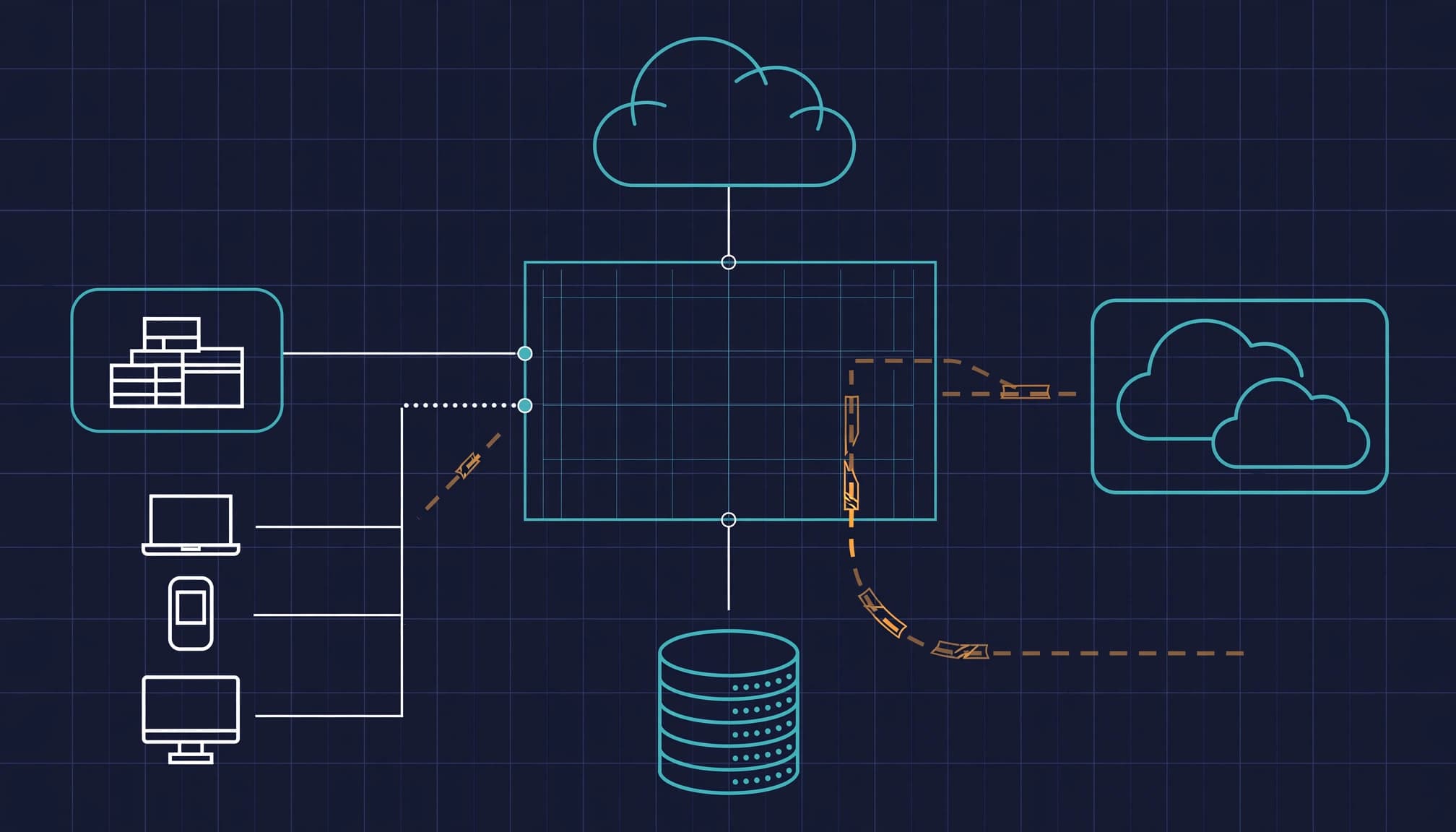
The Microsoft cloud security benchmark helps organize cloud requirements. However, MCSB v2 remains preview. I record the benchmark version rather than mixing recommendations across editions.
For an Azure landing zone review, I assess management-group structure, policy assignments, subscription boundaries, shared services, and service-level configuration. Secure cloud architecture also requires identifying which team operates each shared control.
Azure Policy’s MCSB initiative maps controls to policy definitions that assist with assessment. Azure Policy can evaluate or enforce settings on assigned Azure resources, but it doesn’t automatically enforce Microsoft 365 tenant settings or resolve procedural requirements.
I document Azure Policy effects, exclusions, remediation responsibilities, and applicable regulatory compliance obligations. Custom policy definitions need testing and change approval before deployment.
Hybrid gaps also matter. Device hardening, patching, and recovery tests may depend on existing data center technology or tools outside Microsoft’s stack. A Microsoft 365 upgrade won’t replace a tested backup and business continuity process.
For multi-location businesses, POS systems and kitchen technology may sit outside the tenant’s managed-device boundary. Their coverage needs an explicit owner rather than an assumption that E5 protects them.
Define What the Client Receives From the Engagement
Outside help is valuable when it produces decisions your internal team can execute. I structure an RVA Tech Visions engagement around a written scope, agreed evidence access, and a clear division between assessment and remediation.
The Risk assessment covers licensing and renewal dates, tenant configuration, identity and guest access, endpoint coverage, Threat protection, data protection, and logging. It reviews Microsoft Purview and Information protection controls, plus Compliance management evidence for applicable Regulatory compliance obligations. Existing Office 365 migration plans also enter the scope when they change data locations or access boundaries.
The final package should include:
- An executive risk report connecting findings to data leakage, audit exposure, downtime, productivity loss, and insurance renewals, including Incident response gaps.
- A control matrix with status, evidence notes, owners, affected systems, and documented coverage gaps.
- A prioritized remediation roadmap with dependencies, effort estimates, and licensing recommendations.
- Architecture and data-flow diagrams, plus an evidence register your team can maintain.
I include policy gaps alongside technical findings. A tabletop exercise can validate documented Incident response responsibilities, including escalation, account containment, and business recovery, and record the test evidence.
At handoff, your administrators or cybersecurity services provider should understand each recommendation and its acceptance test. If implementation is included, the scope should name the changes and validation evidence.
Ongoing cloud management is a separate decision. Monthly security reviews, user lifecycle changes, policy maintenance, and renewal planning need defined responsibilities. Your business technology partner should also explain how exceptions are approved and revisited.
Recognize When the Engagement Isn’t Worth It
A full E5-to-E7 assessment isn’t worthwhile when the business has no planned Copilot or agent deployment and already maintains a current, tested control map.
Likewise, E7 won’t fix basic operational gaps by itself. Incident response ownership, MFA coverage, endpoint management, or recovery procedures may need attention before another bundle purchase.
For a smaller IT team, a focused licensing review or targeted identity assessment may provide better value. Managed IT for small business should fit the actual risk and available operating capacity.
Vendor consolidation doesn’t automatically create savings. The value depends on tools you can genuinely retire, contract timing, migration work, and support requirements. Infrastructure optimization should account for staff effort as well as subscriptions.
A credible technology consulting recommendation can be to keep E5, configure it properly, and reconsider E7 when a defined use case emerges.
Frequently Asked Questions
What is E5 security control mapping?
It connects a business or compliance requirement to applicable security controls, licensed capabilities, configurations, tests, evidence, and owners. The map helps distinguish protections already available from gaps that require configuration, operational work, or additional licensing.
Does owning Microsoft 365 E5 mean a control is met?
No. A license or configured policy is not proof that the control works for the intended users, devices, and data. Use repeatable tests and evidence, such as sign-in records or DLP test results, to assess whether its objective is met.
What should an E5-to-E7 assessment verify?
Compare E7 with the organization’s actual baseline, including whether Copilot is already licensed, and validate applicable entitlements, availability, deployment scope, and operational readiness. Also account separately for Azure compute, model, and message consumption, which aren’t included in the listed licensing price.
Does Agent 365 run agents?
No. Agent 365 is a governance and control plane for inventorying, governing, and overseeing agents, rather than an agent runtime. Assess agent identities, permissions, connected systems, ownership, and lifecycle controls, and verify the availability status of each proposed capability.
Choose the Next Step Based on Readiness
The strongest E5 security control mapping connects spending to tested controls, accountable owners, and evidence your business can use.
I recommend starting with a focused readiness assessment or licensing review through RVA Tech Visions. Bring your current E3, E5, or E5-plus-Copilot baseline, renewal timing, and planned agent use cases.
That creates a low-pressure decision point: improve existing coverage, scope outside support, or proceed with an E7 evaluation backed by a documented business need.